Connect With Our Team
Get In Touch
Walls are no longer just quiet backgrounds. In 2026, they are becoming expressive design features that add color, texture, and warmth to a room. Trending ceramic wall tiles in 2026 balance this visual personality with practical needs such as simple cleaning and lasting appeal.
This year’s key themes include tactile surfaces, warm natural shades, modern subway layouts, digital decoration, and mixed finishes. Whether you are renovating a home, planning a commercial project, or sourcing tiles in bulk, the right choice should suit both the room and its daily use. Trends are forecasts, so always confirm product suitability through current technical specifications.
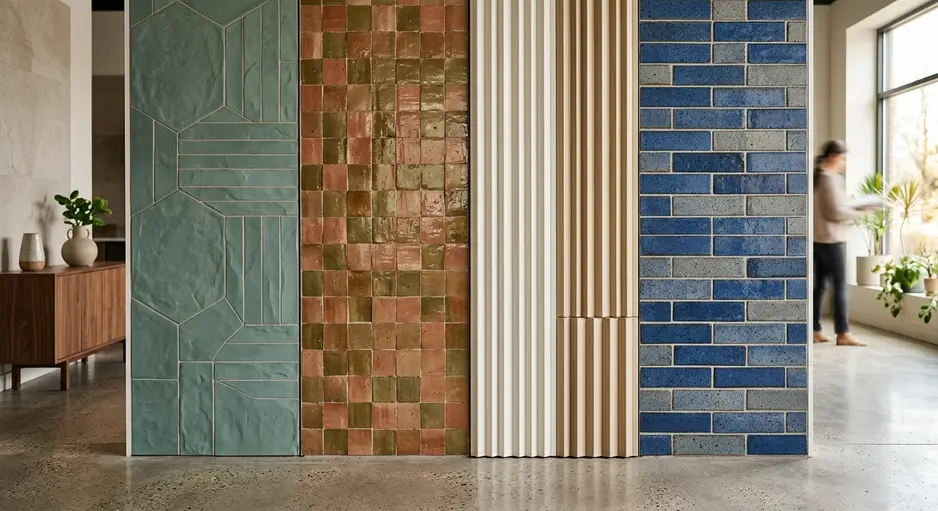
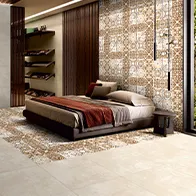
Fluted, ribbed, waved, and sculpted surfaces are among the top ceramic wall tile trends for 2026. They give flat walls more depth and can create dramatic shadows under directional lighting.
Textured ceramic wall tiles work well behind vanities, inside decorative niches, and on reception or dining room feature walls. Use deep relief with care near cooktops or hard-water areas. Grooves and raised details may collect grease, dust, or mineral residue and need more frequent cleaning.
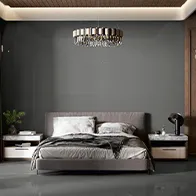
Cold grey is giving way to sand, clay, terracotta, mushroom, taupe, sage, olive, and muted mineral blue. These warmer tones feel calm without making an interior look plain.
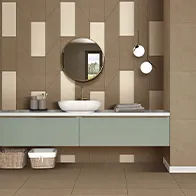
Earthy modern ceramic wall tiles pair naturally with timber, brushed brass, dark metal, stone worktops, and painted cabinetry. For a balanced room, use a warm neutral across the main wall and add deeper green, blue, or burgundy as an accent.
Matte ceramic wall tiles create soft, understated backgrounds. Glossy ceramic wall tiles reflect more light and can make a compact or dark room feel brighter. In 2026, designers are combining both rather than choosing only one.
A matte field tile may be paired with glossy strips, borders, or niches in a related shade. Keep in mind that finish affects appearance and cleaning habits, but it does not determine moisture resistance or overall technical performance by itself.
Zellige-inspired designs feature uneven-looking edges, gentle glaze movement, and deliberate shade variation. They bring the warmth of handmade work to kitchens, bathrooms, bars, and decorative walls.
Before ordering, inspect several pieces instead of relying on one sample. Review the stated shade variation and look at larger installation views. This helps prevent surprises when the delivered tiles vary in tone or surface movement.
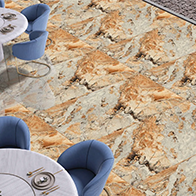
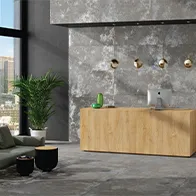
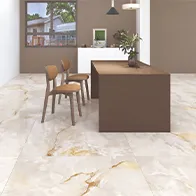
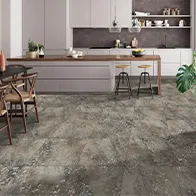
Digital printed ceramic wall tiles can recreate stone, plaster, terrazzo, watercolor, fabric, and mineral effects with controlled variation. Floral ceramic wall tile patterns are also appearing in powder rooms and framed panels, while geometric ceramic wall tile designs suit backsplashes and compact focal areas.
Ask how often a graphic repeats across the collection. A short pattern cycle may become obvious on a large wall unless the pieces are rotated or arranged carefully.
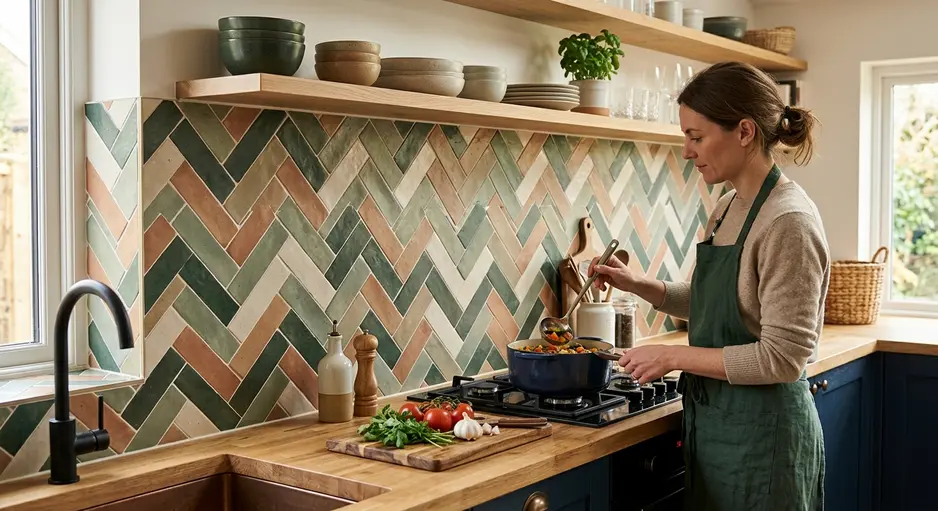
Subway ceramic wall tiles remain popular, but their layouts are changing. Longer proportions, vertical stacks, straight grids, and herringbone arrangements bring a fresh look to a familiar shape.
A vertical stack can make a low ceiling seem higher. Horizontal placement can help a narrow wall appear wider. Matching grout creates a calm surface, while contrasting grout draws attention to the layout.
Checkerboard designs are moving beyond sharp black and white. Softer combinations such as cream and sage, beige and blue, or two shades of terracotta feel easier to use. Alternating gloss and matte pieces can create a subtle pattern without adding another color.
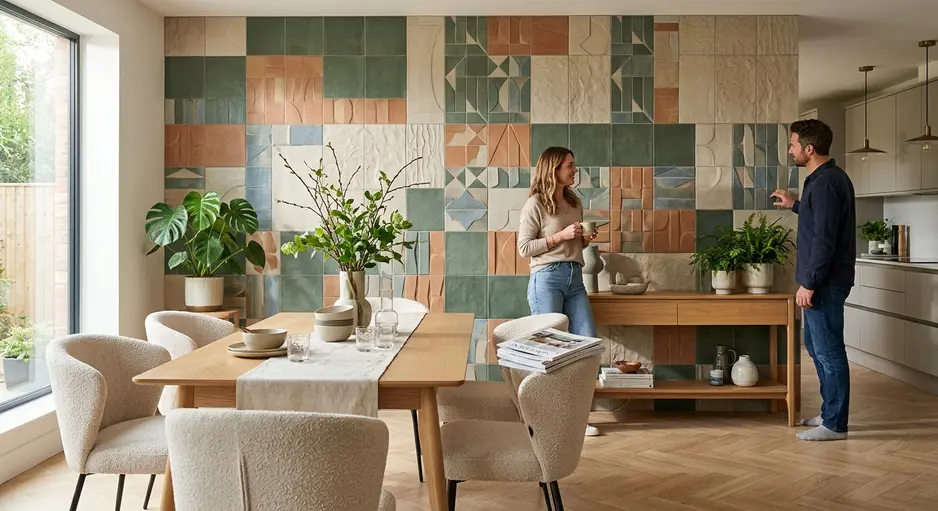
Decorative ceramic wall tiles are being used as framed backsplash panels, mirror borders, and mural-style inserts. Pairing them with a simple field tile controls cost and prevents the room from feeling crowded. Strong patterns usually work best within one clearly defined area.
Appropriately specified ceramic bathroom wall tiles can be used in many wet-area projects. However, tile and grout do not replace the correct substrate, waterproofing system, sealant, or professional installation behind a shower.
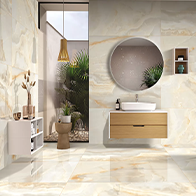
Choose moisture-resistant wall tiles approved for the exact location. Smooth, easy-to-clean wall tiles are practical near showers and basins. In a small bathroom, light patterns can keep the room open, while a rich color or relief tile can define a niche or vanity wall.
For a ceramic wall tile used as a kitchen backsplash, focus on a glazed, cleanable surface. Stain-resistant ceramic tiles can make everyday splashes easier to manage. If low maintenance matters, avoid deep grooves immediately behind the cooktop.
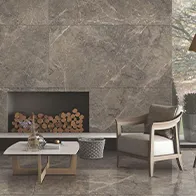
The latest ceramic wall tiles also suit entryways, dining rooms, home bars, reception spaces, and selected fireplace surrounds. For fireplaces, verify heat exposure, substrate, adhesive, and installation requirements before approving the product.
Begin with the setting rather than the color. Is the wall indoors or outdoors? Is it in a wet or dry area? Will it be used in a home or a busy commercial space? Never assume a wall-only product is suitable for floors.
Review the manufacturer’s intended-use information and installation instructions. ANSI A137.1 and ISO 13006 provide recognized frameworks for ceramic tile classification, while the Tile Council of North America offers established installation guidance.
Gloss can brighten a dark room, but it may show water spots or reflections. Matte finishes give a quieter appearance. Heavy texture adds depth but can hold grease, soap residue, or dust. Request the recommended cleaning method before buying.
View samples in daylight and under the lighting planned for the room. If a design includes variation, inspect more than one piece. For larger orders, confirm the batch, caliber, finish, and pattern details before dispatch.
Your installer should calculate extra material for cuts, breakage, and future repairs. Straight layouts usually need less overage than herringbone, diagonal, or complex patterned designs.
Matching grout blends the joints into the surface. Contrasting grout highlights each tile and makes the layout more visible. Joint width should follow product guidance and the installer’s recommendation rather than appearance alone.
Porcelain is a category of ceramic tile made to meet stricter water-absorption requirements. It is generally denser and is often selected when a project needs demanding technical performance. Standard ceramic wall tile is often lighter and may be easier to cut during vertical installation.
Neither option is automatically better. Ceramic can be practical for backsplashes, bathroom walls, and decorative installations. Porcelain may suit projects that require specific exposure ratings or coordinated wall-and-floor surfaces. Compare intended-use ratings, technical data, maintenance, and installed cost rather than choosing by appearance alone.
A simple design plan is to use about 70% quiet field tile, 20% supporting color or texture, and 10% decorative detail. The proportions can change, but this framework prevents a small room from becoming visually busy.
Small tiles add detail but create more grout lines. Large formats can make walls look calmer. Vertical patterns suggest height, while horizontal layouts can make a narrow area seem broader.
Build a sample board before final approval. Glaze, relief, grout, and shade variation can look very different under warm and cool lighting.
Ceramic wall tiles price and design ideas vary by market and project. Cost is influenced by tile size, thickness, glaze, textured tooling, digital printing, decorative effects, order volume, packaging, freight, duties, and installation complexity.
Compare total installed cost rather than the unit price alone. A complex pattern may require more cutting, grout, labor, and waste than a simple stacked layout.
When evaluating a ceramic wall tile supplier or a ceramic wall tile manufacturer for bulk orders, request clear documents and current samples. Buyers should ask about:
An international supplier of ceramic wall tiles should be assessed through current production samples, written specifications, and clear commercial terms. Review the complete ceramic wall tile collection instead of judging quality through selected product images alone. Buyers can explore Asiano Ceramic to review available designs and discuss samples, specifications, availability, and order needs.
Buy Trending Ceramic Wall Tiles
The strongest 2026 interiors combine visual trends with sensible product choices. Texture, warm color, updated classics, and digital decoration can all add character when they suit the room’s lighting and daily use.
Shortlist products by application, request current samples, review technical data, and test each option with the planned grout and lighting. Explore Asiano Ceramic’s wall tile designs or contact the team to discuss specifications, availability, samples, and bulk-order requirements.
Key trends include tactile relief, warm natural colors, handmade effects, updated subway layouts, botanical prints, geometric patterns, and mixed matte-gloss surfaces. Coordinated wall schemes are also replacing the practice of using one tile across every surface.
Yes, when the product is approved for the intended bathroom location. Shower areas also need a suitable substrate, waterproofing, grout, sealant, and correct installation. Tile alone does not make the wall assembly waterproof.
Smooth, glazed tiles are usually easier to clean around splash and cooking areas. Deep relief, uneven surfaces, and layouts with many grout joints may need more care because grease and residue can collect in the details.
It depends on the room. Glossy surfaces reflect light and make color appear richer. Matte surfaces create a softer, calmer look. Cleaning preferences and lighting matter, but technical suitability must be checked separately.
Wall-only tiles should not be installed on floors. They may not meet the required load, wear, or slip-resistance criteria. Always check the manufacturer’s intended-use and performance rating before installation.
Trending Tile Colors and Patterns for Modern Design
 05 August 2026

Golden & Onyx Tiles Exporter from India to Morocco
04 August 2026

Porcelain & Ceramic Tiles Exporter from India to Germany
04 August 2026

Why 600x600 MM Porcelain Tiles Are Trending Worldwide
02 July 2026

Regular vs 3D Elevation Tiles: Which Should You Choose?
02 July 2026

Asiano Ceramic has captured the memories of millions of customers by creating in home interior design.Asiano Ceramic strives to be the most demanded and quality manufacture and exporter ceramic vitrified tiles in Indian and international markets. We are highly committed to serving our patrons and clients right. We are constructing India’s largest wall tiles manufacturing plant and We will supply in both Indian market as well as overseas.
ASIANO CERAMIC LLP | Designed & Managed by : Lightlink Solutions

Whatsapp Chatx
Hi! Click one of our representatives below to chat on WhatsApp or send us email to inquiry@asianoceramic.com
 |
Mehul Vasoya 0091 95105 63767 |
|
Dhaval Detroja 0091 97127 38883 |