Connect With Our Team
Get In Touch
Choosing the right bathroom wall tiles and bathroom floor tiles is not just about aesthetics. It directly impacts safety, durability, maintenance costs, and long-term performance. After working with homeowners, architects, hotel chains, and bathroom tiles export manufacturers India for over a decade, I can confidently say that material selection makes or breaks a bathroom project.
If you’re wondering about the best material for bathroom wall tiles or the best material for bathroom floor tiles, this expert guide will walk you through technical factors, real-world case studies, and proven strategies that deliver results.
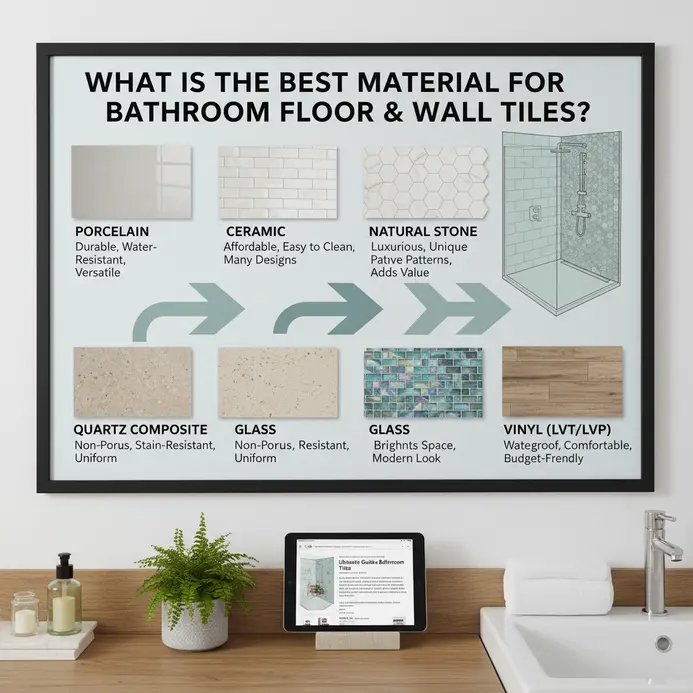
Bathrooms are high-moisture, high-traffic environments. Based on extensive industry work, four technical factors determine tile performance: water absorption, slip resistance, durability, and maintenance.
The water absorption rate tiles for bathrooms should always be under 0.5% for wet areas. This is where the porcelain tile and ceramic tiles bathroom debate becomes important.
In multiple wet room projects, switching from ceramic to porcelain eliminated recurring dampness complaints within months.
Safety is non-negotiable. The slip resistance R value bathroom tiles rating determines how safe a floor tile is when wet.
For homes, I recommend non-slip bathroom floor tiles for home with at least R10 rating. Anti-slip porcelain tiles for bathroom floors consistently outperform glossy finishes in safety tests.
The PEI rating for bathroom floor tiles indicates wear resistance. For residential bathrooms, PEI III or IV is sufficient.
In hotel projects, we always specify high PEI porcelain due to superior porcelain tile durability for bathrooms. It withstands cleaning chemicals, heavy foot traffic, and constant moisture exposure.
Homeowners often overlook grout and sealing. Selecting low maintenance bathroom wall tiles reduces long-term upkeep costs.
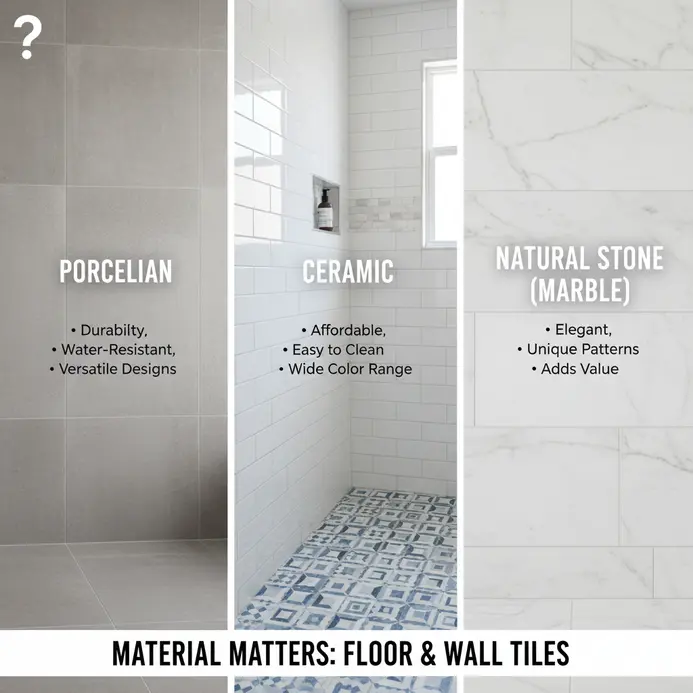
For moisture-heavy environments, best material for bathroom wall tiles porcelain stands out.
Glazed ceramic wall tiles for bathrooms are cost-effective and widely available.
Mosaic bathroom wall tiles design ideas add character to niches and accent walls.
Natural stone bathroom tiles marble vs porcelain is a common luxury comparison.
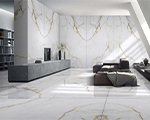
Large format bathroom floor tiles modern bathrooms create seamless aesthetics and reduce grout lines.
The safest option is textured anti-slip porcelain tiles for bathroom floors with R10 or R11 rating. They provide grip even in soap-heavy shower zones.
Yes. Porcelain bathroom tiles for underfloor heating conduct and retain heat efficiently. Always use flexible adhesive and proper expansion joints.
In most cases, yes. Glossy finishes lack sufficient grip when wet. Reserve glossy surfaces for walls.
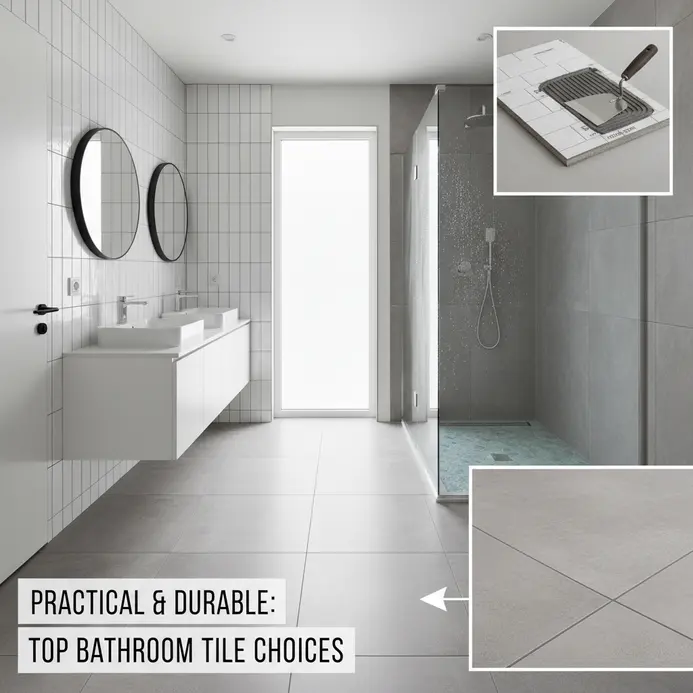
Demand for seamless aesthetics is driving adoption of thin slabs in urban homes.
Homeowners prefer marble-look porcelain for durability without sealing needs.
Textured finishes improve safety and align with modern spa-inspired interiors.
Bathroom tile design trends India show increasing demand for eco-conscious production processes.
Porcelain is the overall winner for both bathroom wall tiles and bathroom floor tiles.
High-quality glazed ceramic works well for walls and low-traffic bathrooms.
Natural stone offers unmatched elegance but requires sealing and upkeep.
Work with trusted bathroom tiles wholesale suppliers India or certified bathroom tiles export such as Asiano Ceramic to ensure quality and global compliance.
Porcelain is generally the best material for bathroom wall tiles due to low absorption and durability.
Porcelain remains the best material for bathroom floor tiles for safety, strength, and longevity.
Porcelain offers better durability and water resistance.
Light-colored glazed ceramic wall tiles for bathrooms enhance perceived space.
PEI III or IV is recommended for residential bathrooms.
Ceramic Wall Tiles: Trending Styles for 2026 Interiors
 05 August 2026
Trending Tile Colors and Patterns for Modern Design
05 August 2026
Golden & Onyx Tiles Exporter from India to Morocco
04 August 2026
Porcelain & Ceramic Tiles Exporter from India to Germany
04 August 2026
Why 600x600 MM Porcelain Tiles Are Trending Worldwide
02 July 2026

Asiano Ceramic has captured the memories of millions of customers by creating in home interior design.Asiano Ceramic strives to be the most demanded and quality manufacture and exporter ceramic vitrified tiles in Indian and international markets. We are highly committed to serving our patrons and clients right. We are constructing India’s largest wall tiles manufacturing plant and We will supply in both Indian market as well as overseas.
ASIANO CERAMIC LLP | Designed & Managed by : Lightlink Solutions

Whatsapp Chatx
Hi! Click one of our representatives below to chat on WhatsApp or send us email to inquiry@asianoceramic.com
 |
Mehul Vasoya 0091 95105 63767 |
|
Dhaval Detroja 0091 97127 38883 |