Connect With Our Team
Get In Touch
Choosing the right tile sizes is one of the most important decisions when designing or renovating a home. While color, finish, and texture often get the most attention, tile size plays a major role in how a space looks, feels, and functions. The wrong size can make a room appear cramped, uneven, or overly busy, while the right size can instantly elevate the design.
This complete tile size guide will help you understand standard tile sizes, room-wise recommendations, and practical tips to choose the best tiles for bedroom floors, kitchens, bathrooms, and more. Whether you’re planning a modern home or upgrading an existing space, this guide will help you make confident decisions.
Tile size directly affects the visual balance and usability of a room. Larger tiles create a seamless and open appearance, while smaller tiles add texture and detail. The number of grout lines, tile layout, and proportions all influence how spacious or compact a room feels.
For example, fewer grout lines from large tiles can make small rooms look bigger. On the other hand, smaller tiles may offer better grip and flexibility in wet areas. Tile size also impacts maintenance; larger tiles are easier to clean, while smaller tiles require more grout care.
Understanding floor tile sizes and wall tile sizes ensures that your space is not only stylish but also practical and long-lasting.
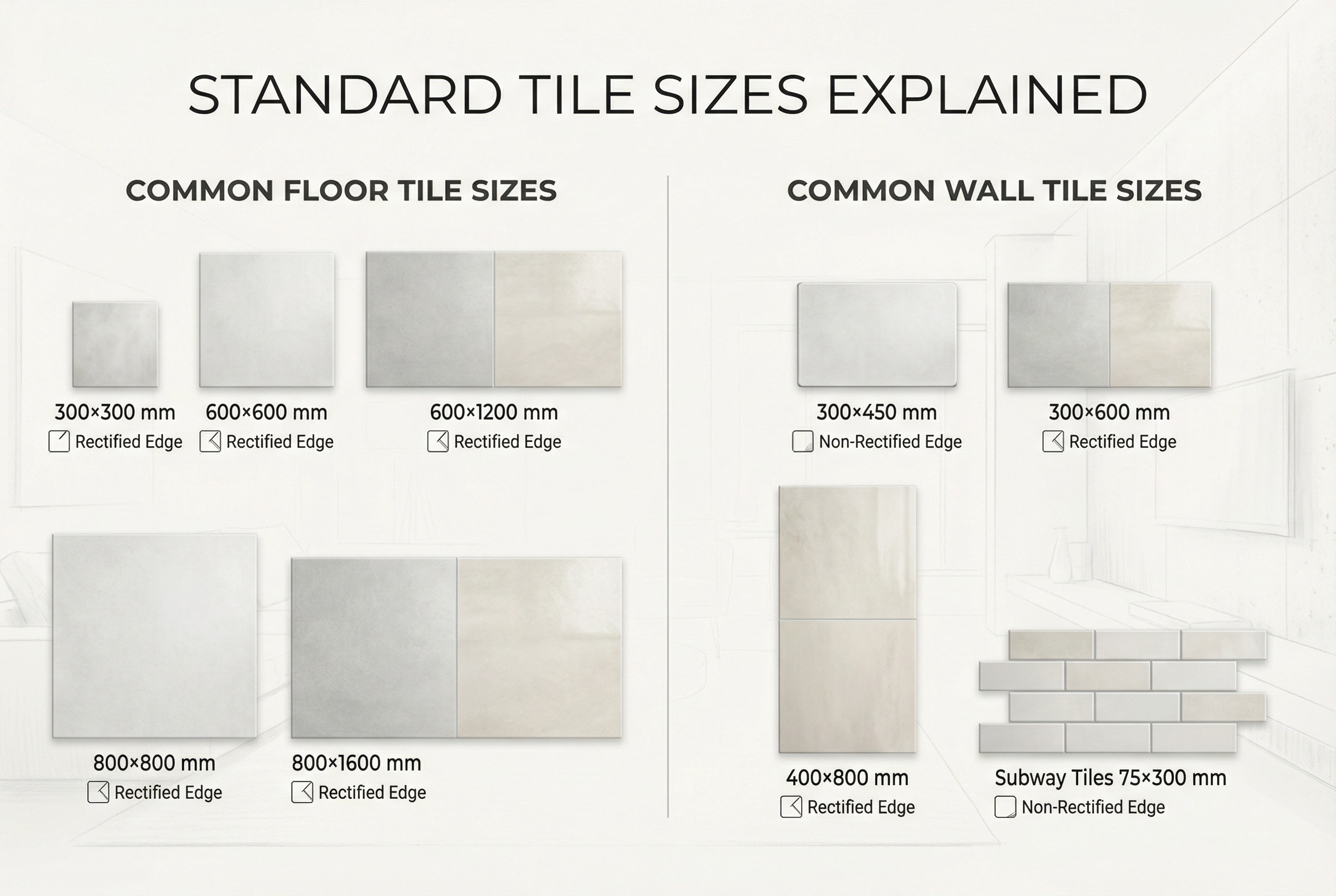
Before selecting tiles for specific rooms, it’s important to understand standard tile sizes commonly used in residential and commercial spaces.
300x300 mm
600x1200 mm
800x800 mm
800x1600 mm
300x450 mm
300x600 mm
400x800 mm
Subway tiles (75x300 mm, 100x300 mm)
A tiles size chart helps compare these dimensions easily and ensures compatibility across rooms. Rectangular tiles are ideal for modern layouts, while square tiles remain a timeless option. Thickness and edge finish (rectified or non-rectified) also influence installation quality.
A compact room can still use bigger tiles, but only if the layout doesn’t create too many thin cuts. Too many small cut pieces can look messy and raise breakage risk during installation.
More grout lines usually mean more cleaning effort. If you want a low-maintenance floor, prefer sizes that reduce grout lines while still fitting the room well.
Bathrooms and balconies need more traction. Sometimes smaller tiles or textured finishes are a smarter choice than oversized glossy tiles.
Bigger tiles demand a flatter surface. If the surface isn’t level, you may see “lippage” (edges that sit higher than the neighboring tile). This matters more when using large format tiles.
Minimal, modern interiors often look best with fewer grout lines and larger sizes. Traditional or detailed themes may benefit from smaller formats, patterns, or borders.
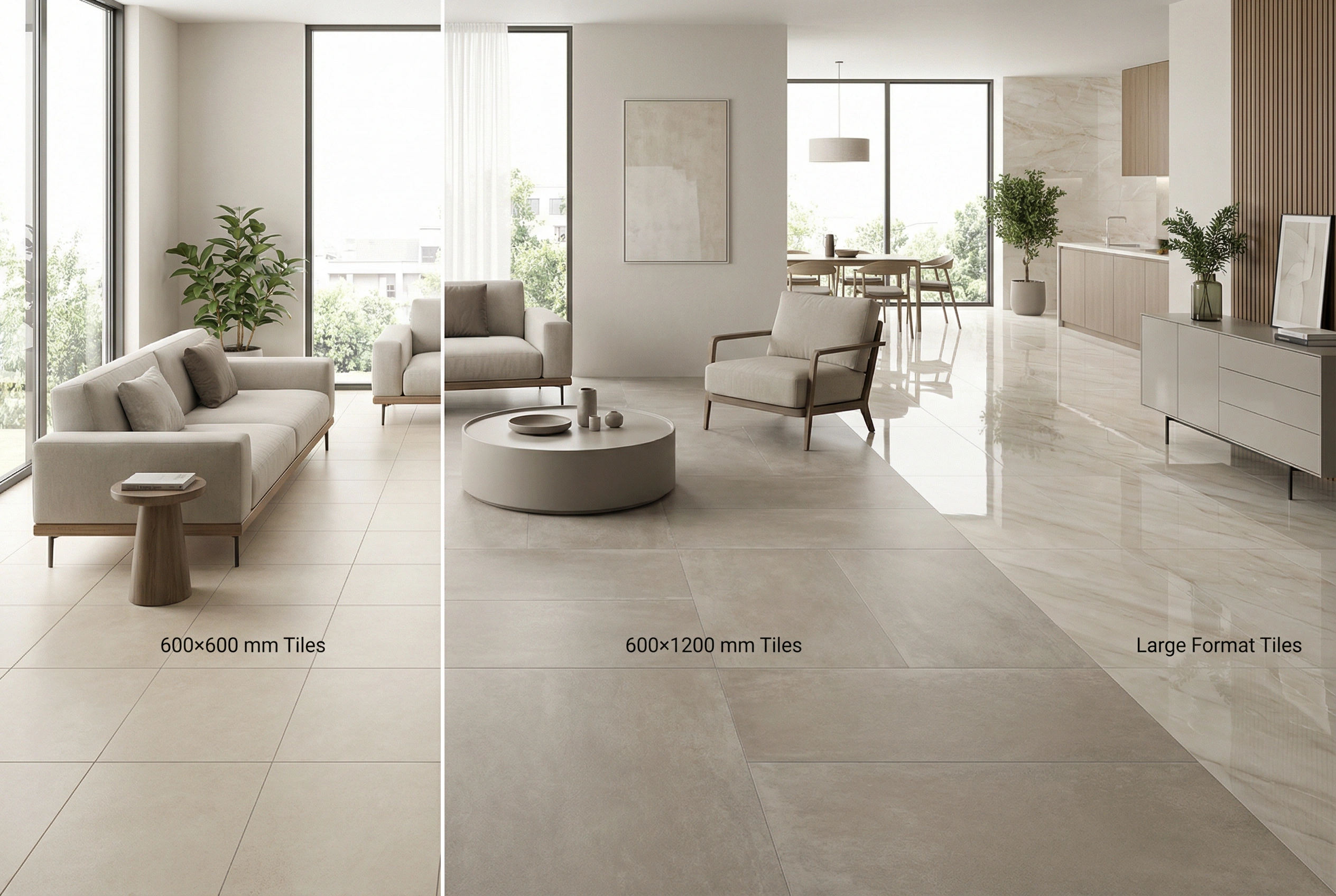
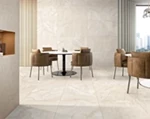
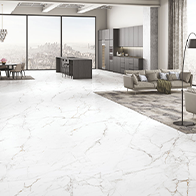
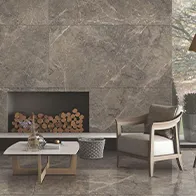
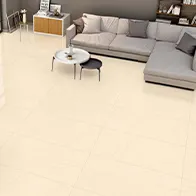
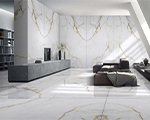
Living rooms benefit the most from larger tiles that enhance openness and luxury.
For small living rooms: 600x600 mm floor tiles work well
For medium to large living rooms: 600x1200 mm or larger tiles are ideal
Open layouts: Large format tiles create visual continuity
Glossy finishes reflect light and make spaces appear bigger, while matte finishes offer a subtle, premium look. Fewer grout lines result in a cleaner and more elegant appearance.
Using large floor tile sizes in the living room also improves durability and ease of maintenance, especially in high-traffic areas.
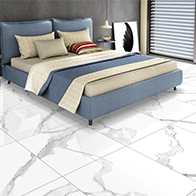
When selecting tiles for bedroom floor, comfort and aesthetics should be the top priorities. Bedrooms benefit from balanced proportions that don’t overwhelm the space.
Small bedrooms: 600x600 mm tiles maintain symmetry
Master bedrooms: 600x1200 mm tiles create a modern, spacious feel
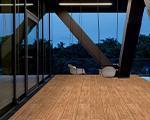
Wood-look plank tiles: 150x900 mm or similar formats
Large tiles with minimal grout lines create a calm and uncluttered atmosphere. Neutral tones and wood-effect tiles are especially popular for bedrooms, as they add warmth without sacrificing durability.
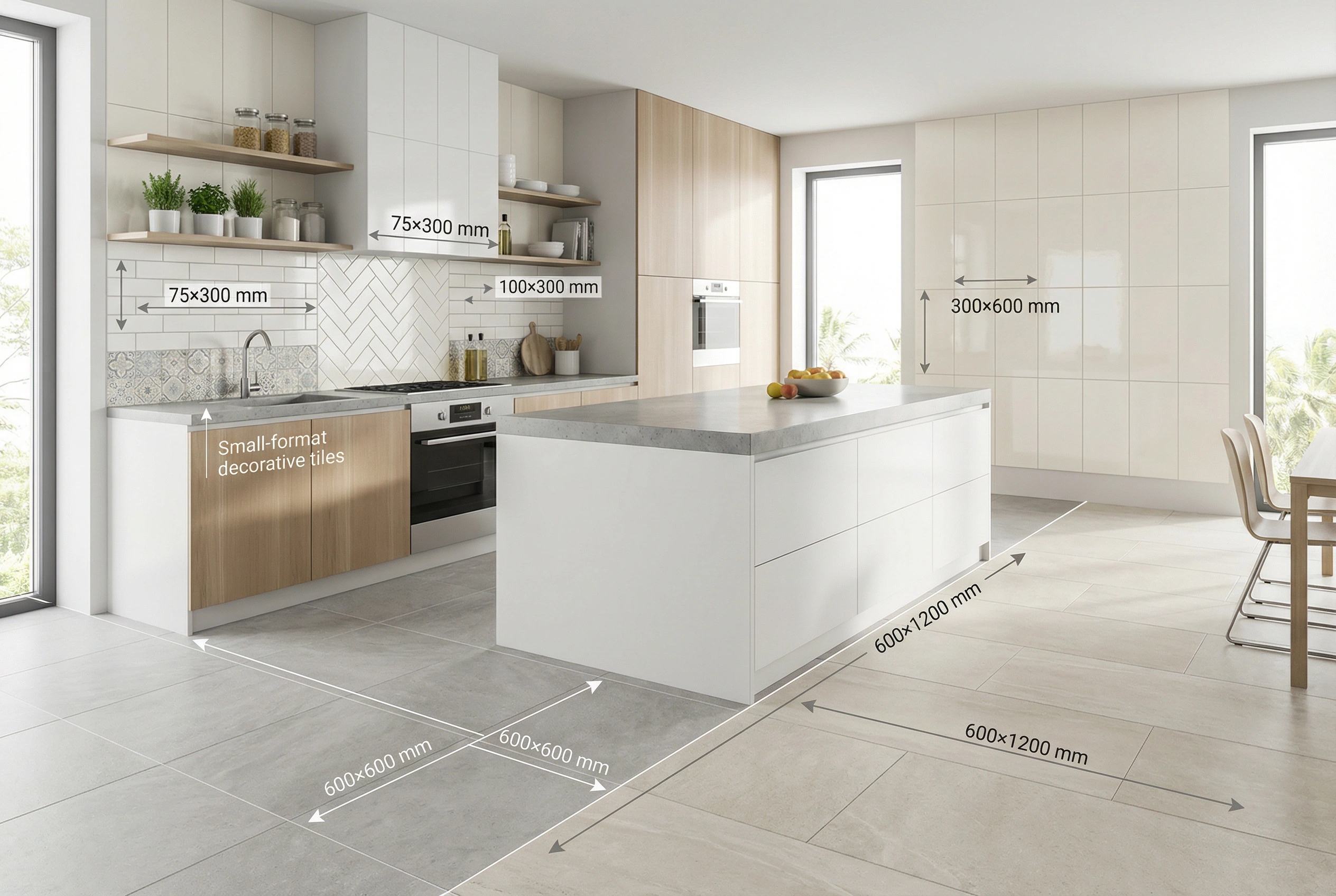
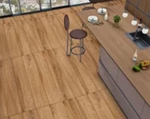
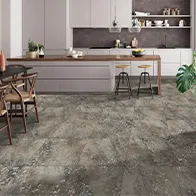
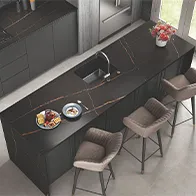
The kitchen requires careful tile size selection for both floors and walls due to spills, heat, and frequent cleaning.
600x600 mm is the most practical and popular choice
Larger kitchens can use 600x1200 mm tiles
Matte or anti-slip finishes are recommended
300x600 mm tiles are widely used
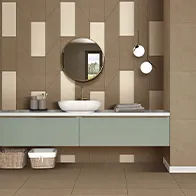
Vertical layouts make kitchens appear taller
Subway tiles (75x300 mm or 100x300 mm)
Small-format tiles for decorative impact
Choosing the right kitchen tile sizes, including kitchen wall tile sizes, kitchen floor tile sizes, and backsplash tile sizes, ensures hygiene, easy cleaning, and a visually balanced cooking space.
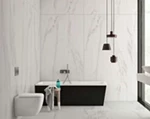
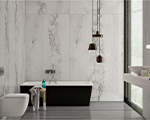
Bathrooms require special attention to safety, drainage, and moisture resistance. The right bathroom tile sizes can improve both functionality and design.
300x300 mm or 300x450 mm for better slope control
Anti-slip finishes are essential
Smaller tiles provide improved grip
300x600 mm tiles are the most common
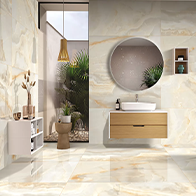
Large wall tiles reduce grout lines and look cleaner
Vertical placement increases perceived height
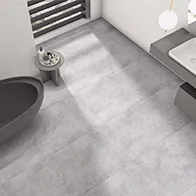
For wet zones like showers, smaller bathroom floor tile sizes help prevent slipping and allow proper drainage. Large bathroom wall tile sizes enhance the overall aesthetic and make cleaning easier.
Large tiles make small rooms appear bigger by reducing grout lines
Small tiles work better in uneven or compact wet areas
Match tile size with ceiling height for balanced proportions
Light-colored tiles enhance spaciousness
Layout patterns like diagonal or staggered can visually expand rooms
Using a proper tile size guide helps homeowners avoid design mistakes and achieve optimal results.
Use this quick tiles size chart as a practical shortlist. It’s designed to help you choose faster without overthinking.
|
Room / Area |
Best Sizes (Examples) |
Why It Works |
Pro Tip |
|
Living Room |
600×600, 600×1200, 800×800 |
Fewer grout lines, premium flow |
Match grout color to tile for a seamless look |
|
Bedroom |
600×600, 600×1200 |
Calm, less “grid” effect |
Choose matte/satin for comfort |
|
Kitchen Floor |
600×600, 600×1200 |
Easy cleaning, modern finish |
Use stain-resistant grout |
|
Kitchen Wall |
300×600 |
Clean lines, fewer joints |
Plan tile layout around outlets |
|
Backsplash |
75×300, mosaics |
Fits tight spaces and details |
Use a darker grout for easy maintenance |
|
Bathroom Floor |
300×300, 300×600, mosaics |
Better grip and slope handling |
Prefer anti-slip surface |
|
Bathroom Wall |
300×600, 600×1200 |
Spa look, fewer grout lines |
Align joints with fixtures for symmetry |
|
Balcony/Outdoor |
300×300, 400×400, 600×600 |
Durable and safe with texture |
Ensure proper slope and drainage |
This table also supports selecting standard tile sizes without confusion.
Choosing tile sizes only based on trends
Ignoring room proportions
Overusing small tiles in large areas
Not considering grout width and wastage
Mixing incompatible tile sizes across connected spaces
Referring to a tiles size chart before finalizing your purchase can help avoid these common issues.
At Asiano Ceramic, you can shortlist the right tile sizes for every space with confidence whether you need practical floor tile sizes for daily wear, modern wall tile sizes for clean interiors, or premium large format tiles for a seamless luxury look. Our collections are designed to match real project needs, with consistent sizing, quality finishes, and dependable production standards that help reduce installation issues and deliver a polished final result.
A versatile range of standard tile sizes for bedrooms, kitchens, living rooms, and bathrooms
Options across kitchen floor tile sizes, kitchen wall tile sizes, and backsplash tile sizes for complete space matching
Reliable choices for bathroom floor tile sizes and bathroom wall tile sizes, including designs made for wet areas
Export-ready quality checks, uniform calibration, and finish consistency for repeatable results across projects
Selecting the right tile sizes is essential for creating functional, stylish, and long-lasting spaces. From kitchens and bathrooms to bedrooms and living rooms, each area has unique requirements that influence tile choice.
By following this tile size guide, using a reliable tiles size chart, and understanding standard tile sizes, you can make informed decisions with confidence. Asiano Ceramic offers a wide range of expertly crafted tiles designed to suit every room and lifestyle.
Choosing the right tile size today ensures comfort, beauty, and performance for years to come.
Larger tiles with fewer grout lines make rooms appear more open and spacious.
Medium bathroom tile sizes, such as 300×600 mm, work well without overwhelming the space.
Yes, large format tiles are ideal for modern homes and offer a seamless look.
Yes, but they should be coordinated carefully to maintain visual balance.

Ceramic Wall Tiles: Trending Styles for 2026 Interiors
 05 August 2026

Trending Tile Colors and Patterns for Modern Design
05 August 2026

Golden & Onyx Tiles Exporter from India to Morocco
04 August 2026

Porcelain & Ceramic Tiles Exporter from India to Germany
04 August 2026

Why 600x600 MM Porcelain Tiles Are Trending Worldwide
02 July 2026

Asiano Ceramic has captured the memories of millions of customers by creating in home interior design.Asiano Ceramic strives to be the most demanded and quality manufacture and exporter ceramic vitrified tiles in Indian and international markets. We are highly committed to serving our patrons and clients right. We are constructing India’s largest wall tiles manufacturing plant and We will supply in both Indian market as well as overseas.
ASIANO CERAMIC LLP | Designed & Managed by : Lightlink Solutions

Whatsapp Chatx
Hi! Click one of our representatives below to chat on WhatsApp or send us email to inquiry@asianoceramic.com
 |
Mehul Vasoya 0091 95105 63767 |
|
Dhaval Detroja 0091 97127 38883 |