Connect With Our Team
Get In Touch
Busy spaces don’t forgive weak floors. When hundreds (or thousands) of people walk through a site every day, the surface gets tested by dust, dragging chairs, trolley wheels, spills, and aggressive cleaning.
That’s why commercial flooring tiles are a smart long-term choice for high traffic areas. They’re built to handle wear, stay safer underfoot, and keep looking professional with less downtime.
In this guide, you’ll learn how to select the right commercial tile for different zones, what ratings matter, and what to check before you approve your order and begin commercial tile installation.

Not all tiles are created for heavy use. A tile that looks great in a quiet home hallway can fail quickly in a lobby or retail aisle.
Commercial-grade performance usually means three things: durability, safety, and easy cleaning. In other words, the floor must resist scratches, stains, and slip risks while staying simple to maintain.
If you’re selecting commercial flooring tiles for high traffic areas, focus on the specs that protect real-world performance, not just showroom looks.
What to look for in commercial-grade tiles:
Strong wear resistance for daily footfall
Stable surface finish that doesn’t polish or fade quickly
Low water absorption (especially for wet or outdoor zones)
Slip resistance where spills are common
Consistent sizing and quality for smoother installation
Choosing the right body type is half the battle. It directly impacts how long your surface stays strong and how it behaves under constant cleaning.

Porcelain is one of the most reliable choices for high traffic tile flooring. It’s dense, strong, and typically low-absorption, which helps it resist stains and moisture.
It also works well across many designs, so you can keep performance without sacrificing aesthetics in lobbies, corridors, or retail floors.
Glazed surfaces can look premium and modern, but they must be selected with the right abrasion rating. In heavy use zones, the wrong glazed finish can show scuffs or dull patches faster.
If you want glossy or designer looks, confirm it’s suitable for the footfall level and cleaning style of your space.
For industrial-style spaces or demanding public areas, full body tiles can be a strong option. If surface scratches happen, the visual impact is lower because the material is more consistent through the body.
That’s why many specifiers prefer it for entrances, busy corridors, and areas where grit is unavoidable.
Large formats are popular, but smaller formats still win in certain situations.
In wet zones, smaller tiles and mosaics offer more grout lines, which can improve traction and help water flow toward drains when installed correctly.
For commercial restrooms, spa areas, and pool decks, the right surface texture and layout matters more than “trend.”
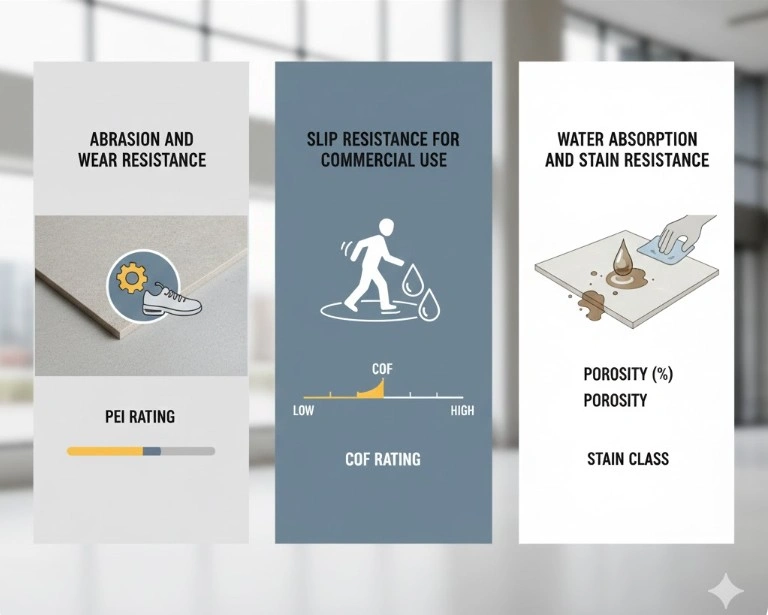
Specs can feel confusing, but you don’t need to become a lab expert. You only need to match the rating to your site’s daily stress.
High-footfall spaces need better resistance to visible wear. Ask your supplier which products are recommended for heavy commercial foot traffic and cleaning frequency.
If your space includes grit (outdoor dust, entrance sand, street debris), upgrade the selection. Grit is the silent destroyer of floors.
Slip performance depends on where the tile is used, how often it gets wet, and what kind of shoes people wear there.
For busy wet areas, prioritize textured or matte finishes and confirm the slip performance standard used in your region. Don’t assume “matte” automatically means safe.
If you need anti slip floor tiles commercial, treat this as a safety spec, not a design preference.
Wet zones require a tile that won’t soak up moisture or hold stains. This matters in kitchens, restrooms, and any facility with frequent mopping and chemicals.
When selecting durable floor tiles, always consider both the tile body and the surface finish. Good performance comes from both.
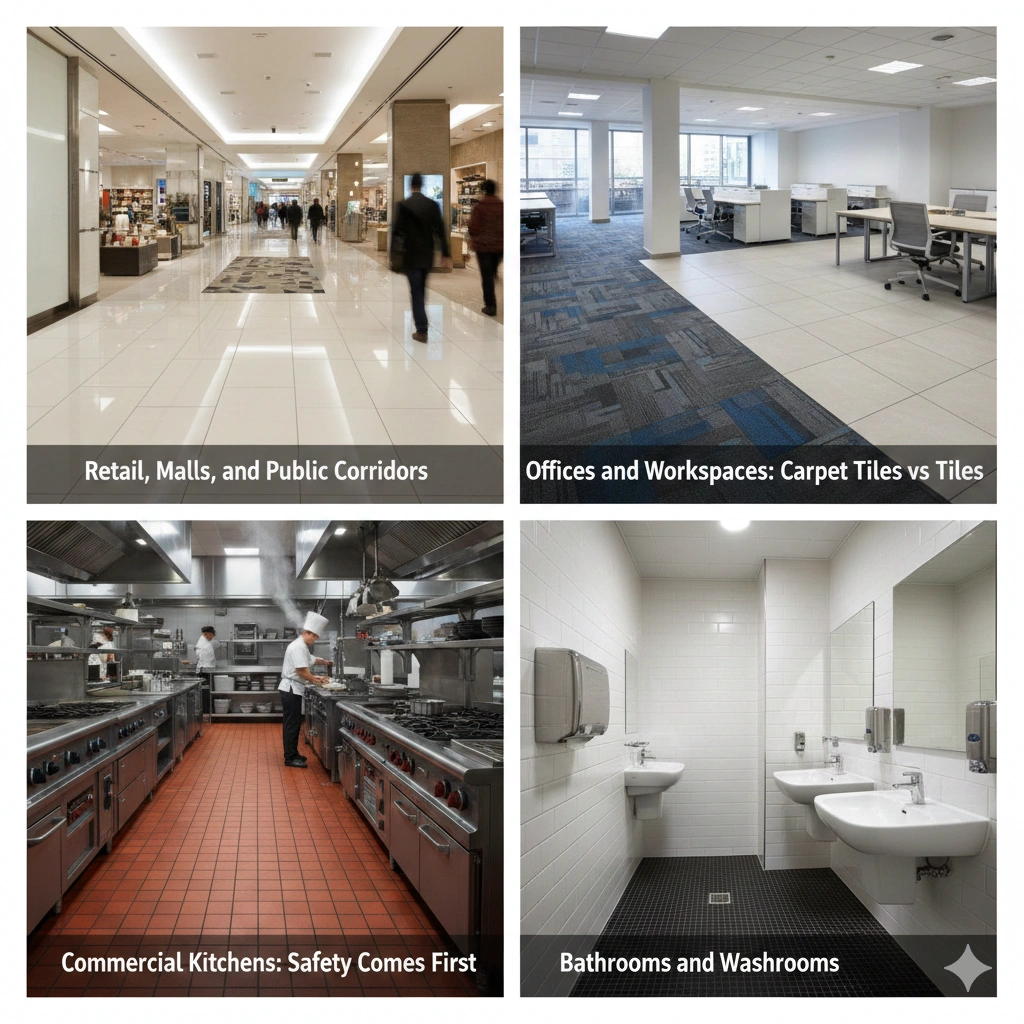
Different zones need different priorities. Here’s a practical way to match the floor to the function.
These spaces demand reliable high traffic flooring with strong wear resistance. You want easy cleaning, consistent appearance, and a finish that won’t become slippery after repeated mopping.
For these high traffic areas, avoid overly delicate surfaces and choose a proven commercial-grade tile body.
Many workplaces prefer a mix of surfaces. Hard floors work well in entrances and walkways, while carpet tiles can improve acoustics in desk zones.
commercial carpet tiles are popular because they’re modular and quick to replace
office carpet tiles can reduce noise and improve comfort
high traffic carpet tiles are best for main aisles and reception routes
If you choose carpet tiles, confirm cleaning plans and stain resistance. If you choose tile, confirm wear and slip needs.
Kitchens are high-risk, high-spill zones. Grease, water, heat, and constant cleaning can defeat weak materials quickly.
For a kitchen, choose the right commercial kitchen tile with slip resistance and chemical tolerance. Many projects specifically require commercial kitchen floor tiles non slip because safety and compliance matter.
Also plan for proper slope and drain layout during commercial tile installation, because even great tiles fail when water has nowhere to go.
Restrooms are wet, chemical-cleaned environments where slip and hygiene matter every day.
For this zone, choose a proven commercial bathroom floor tile with reliable traction. A suitable grout system and proper waterproofing behind the scenes are just as important as the tile itself.
A commercial floor should be practical, but it can still look premium.
Matte / textured finishes are often better for traction and everyday smudge control
Polished finishes can look premium but may not be ideal for wet or heavy-traffic public use
Structured finishes can boost safety but may require more attentive cleaning
If you’re specifying high traffic tile flooring, prioritize performance first, then select a design that supports maintenance reality.
Large tiles can reduce grout lines and create a clean look. But they demand a very flat substrate and skilled installation to avoid lippage.
Smaller tiles are often easier to manage on slopes and wet zones. They can also provide a safer feel underfoot in kitchens and bathrooms.
Before you approve the order, use this checklist to reduce risk and avoid costly replacements.
What is the daily footfall, and are trolleys used?
Is this one of your main high traffic areas?
Will the floor regularly get wet or greasy?
Do you need anti slip floor tiles commercial in this zone?
Do you need commercial kitchen floor tiles non slip specifically?
What cleaning chemicals will be used?
Is the tile body suitable for the environment?
Are spare tiles available for future replacement?
Are trim pieces and matching skirtings available?
This simple step protects your budget and helps your floor stay consistent for years.
Even the best tile fails with the wrong installation. In commercial spaces, installation quality is not optional.
A good commercial tile installation plan includes proper subfloor preparation, leveling, movement joints, and correct adhesive and grout selection.
Large format tiles need extra care with substrate flatness. Wet zones need correct waterproofing, slope planning, and drainage alignment.
Skipping expansion or movement joints
Using the wrong grout for kitchens and heavy cleaning
Poor slope design near drains in wet areas
Installing over weak or uneven substrates
A floor lasts longer when the maintenance plan matches the surface.
Dust and grit act like sandpaper. In many facilities, simple dry dust control (at entrances and daily routes) reduces visible wear faster than expensive cleaners.
Daily dry cleaning in entrances and main walkways
Quick spill response to prevent stains and slip risks
Weekly deep cleaning based on the zone’s needs
Using cleaning products compatible with the tile finish
Well-maintained durable floor tiles keep the space looking newer and reduce long-term repair costs.
When you’re specifying surfaces for public and business spaces, consistency and reliability matter as much as design.
Asiano Ceramic focuses on solutions built for demanding environments, with collections that support both performance and modern styling. Whether you need high traffic tile flooring for corridors and entrances, or targeted surfaces for kitchens and washrooms, the right product selection and specification guidance makes the difference.
If you’re planning a new project or renovation, choose tiles based on the zone’s real usage, safety needs, and maintenance plan. That’s the smartest way to get floors that look good on day one and still perform years later.
For long-lasting performance, commercial flooring tiles remain a top choice for high traffic areas. They deliver strength, easier maintenance, and better visual consistency compared to many alternatives.
Match the tile to the space, prioritize slip safety where needed, and treat commercial tile installation as a performance step not just a finishing step. When you plan the spec properly, you get a floor that works hard, stays safer, and protects your brand image every day.
Yes. commercial flooring tiles are designed to handle frequent footfall, cleaning, and wear better than many residential-grade surfaces. For high traffic areas, selecting the right wear and slip performance is the key.
It depends on the zone. commercial carpet tiles work well for desk areas because they reduce noise, while tile works well for entrances, pantry zones, and walkways. Many offices combine both for comfort and durability.
Choose a surface designed for traction and frequent cleaning. In most kitchens, commercial kitchen floor tiles non slip are preferred to reduce slip risk from water and grease.
Pick a commercial bathroom floor tile with reliable traction and a finish that handles frequent cleaning. Also ensure waterproofing, slope, and grout selection are done correctly.
Confirm subfloor flatness, movement joint planning, adhesive and grout specs, and drainage slope for wet zones. These steps reduce failures and protect your finish.

Ceramic Wall Tiles: Trending Styles for 2026 Interiors
 05 August 2026

Trending Tile Colors and Patterns for Modern Design
05 August 2026

Golden & Onyx Tiles Exporter from India to Morocco
04 August 2026

Porcelain & Ceramic Tiles Exporter from India to Germany
04 August 2026

Why 600x600 MM Porcelain Tiles Are Trending Worldwide
02 July 2026

Asiano Ceramic has captured the memories of millions of customers by creating in home interior design.Asiano Ceramic strives to be the most demanded and quality manufacture and exporter ceramic vitrified tiles in Indian and international markets. We are highly committed to serving our patrons and clients right. We are constructing India’s largest wall tiles manufacturing plant and We will supply in both Indian market as well as overseas.
ASIANO CERAMIC LLP | Designed & Managed by : Lightlink Solutions

Whatsapp Chatx
Hi! Click one of our representatives below to chat on WhatsApp or send us email to inquiry@asianoceramic.com
 |
Mehul Vasoya 0091 95105 63767 |
|
Dhaval Detroja 0091 97127 38883 |