Connect With Our Team
Get In Touch
Choosing between terrazzo tiles and concrete tiles can shape the look, feel, and lifespan of your space. Both materials are widely used in residential, hospitality, and commercial projects, but they differ in design flexibility, durability, and upkeep. This guide breaks down the real differences so you can make a clear and confident choice.
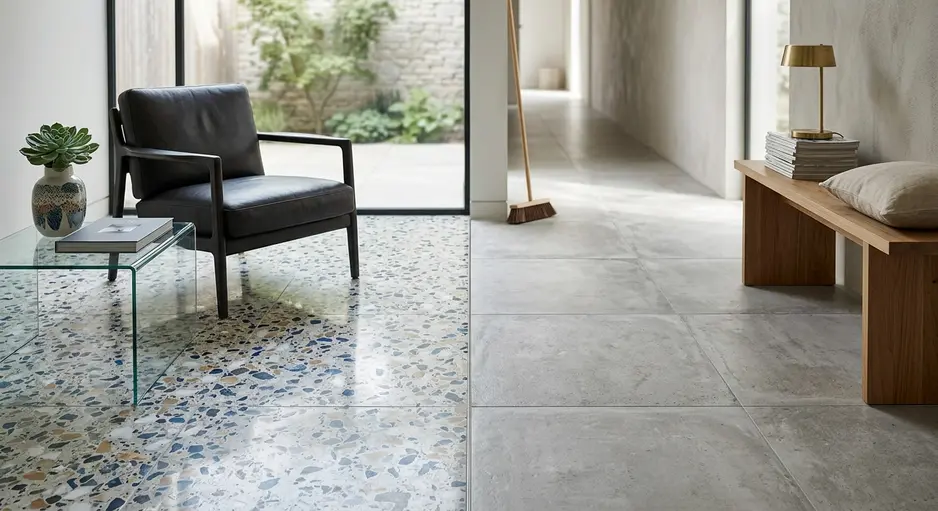
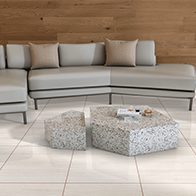
Terrazzo tiles are made by mixing cement or resin with marble chips, quartz, glass, or other aggregates. This mix is poured, cured, and polished to create a smooth surface with speckled patterns. The cement terrazzo mix ratio for tiles usually balances cement, aggregates, and pigments to achieve strength and visual appeal.
Today, terrazzo tiles manufacturers in India produce a wide range of finishes, from subtle neutrals to bold, colorful patterns. These tiles are common in airports, hotels, and high-end homes due to their polished look and long life.
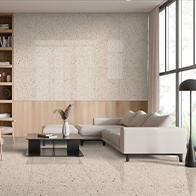
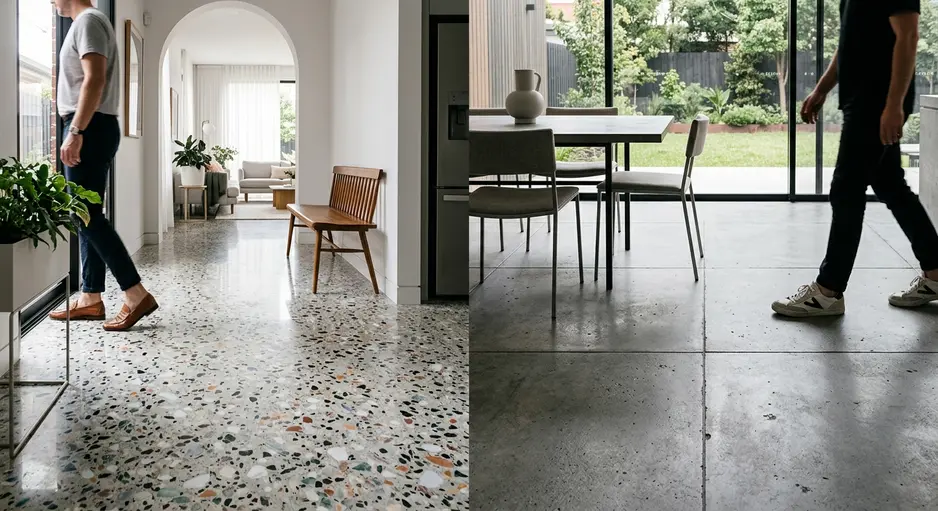
Concrete tiles are made using cement, sand, and water, often molded into shapes or patterns. They can be plain, textured, or decorative, such as cement encaustic concrete tiles patterned. Unlike terrazzo, they usually have a more matte and raw finish.
They are popular for patios, walkways, and commercial areas. Many concrete tile suppliers for commercial projects offer options like stamped or interlocking tiles for outdoor use.
Terrazzo stands out for its rich visual texture. With various terrazzo aggregate color options, designers can create unique patterns. This makes it ideal for statement floors and walls.
Concrete tiles lean toward minimalism or industrial design. While cement encaustic concrete tiles patterned offer decorative choices, they lack the depth and polish of terrazzo.
In hospitality settings, terrazzo tile design ideas for restaurants and hotels often include bold patterns or branding elements. Concrete tiles, on the other hand, suit modern and rugged environments.
When comparing terrazzo vs cement tiles durability comparison, terrazzo generally lasts longer. Its dense surface resists wear, stains, and cracking.
Slip resistance also varies. The slip resistance terrazzo tile rating depends on the finish, while textured concrete naturally offers better grip outdoors.
The polished terrazzo tile cost per square foot is usually higher than concrete due to materials and finishing. However, terrazzo offers better long-term value.
Concrete tiles are more budget-friendly upfront. The bulk concrete tiles price per m2 makes them attractive for large outdoor or commercial projects.
Terrazzo installation requires skill. Terrazzo mosaic installation techniques involve precise placement and polishing, which increases labor time.
Concrete tiles are easier to install, especially large format floor tiles for offices. They require less finishing and can be laid quickly.
Terrazzo is making a strong comeback in modern design. From subtle speckles to bold chips, it fits both classic and contemporary spaces.
Concrete tiles suit industrial and minimalist interiors. Their raw finish works well with metal, wood, and glass elements.
Terrazzo offers design flexibility and durability. Concrete provides strength and affordability. Porcelain sits in between, offering uniform designs and easy maintenance. Your choice depends on style, budget, and use.
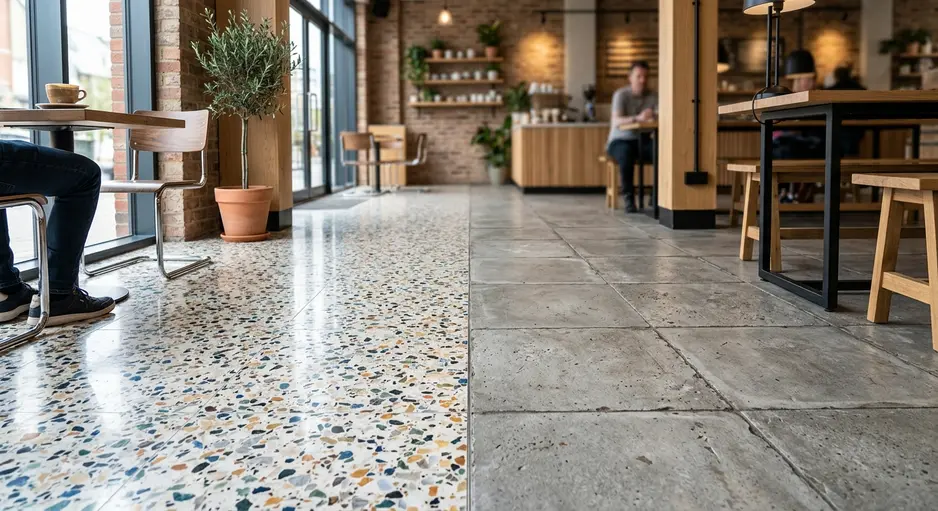
Terrazzo is easy to maintain with regular cleaning. Periodic polishing helps restore shine. Many spaces also use terrazzo restoration and polishing services to extend lifespan.
Concrete tiles are more porous and need sealing. Sealing porous concrete tiles prevents moisture and stains.
Sustainable eco-friendly terrazzo tiles often use recycled materials like marble chips and glass. This reduces waste and supports green building goals.
Some reclaimed aggregate terrazzo tiles exporter focus on eco-conscious production. These tiles contribute to LEED credits in green construction.
Concrete production has a higher carbon footprint, but improved methods are making it more sustainable. Choosing durable materials like terrazzo also reduces replacement needs.
When choosing suppliers, focus on quality, consistency, and supply capacity. Reliable terrazzo tile exporter in India provide global shipping and custom options.
For bulk needs, compare terrazzo floor tiles wholesale options with concrete tile pricing. Look for certifications, production standards, and minimum order quantities.
As a trusted name in the industry, Asiano Ceramic offers a wide range of tile solutions for both domestic and export markets, ensuring consistent quality and design flexibility.
Buy Terrazzo Tiles for Floors & Walls
Both terrazzo tiles and concrete tiles serve distinct purposes. Terrazzo stands out for its elegance, durability, and design flexibility, making it ideal for premium interiors. Concrete tiles offer strength, affordability, and practicality, especially for outdoor and commercial use.
The right choice depends on your project goals, budget, and environment. By understanding their differences, you can select a material that not only looks good but performs well for years.
Terrazzo tiles include decorative aggregates and are polished, while cement tiles are simpler and often matte.
Yes, but they require proper sealing and a suitable finish for slip resistance.
Higher upfront cost and complex installation are the main drawbacks.
Yes, especially when made with recycled materials.
Terrazzo is better for indoor flooring due to its durability, polished finish, and design options. Concrete works well outdoors or in industrial settings.
Yes, terrazzo tiles usually cost more upfront, but they last longer and need less maintenance.
Concrete tiles are often better for outdoor use due to their natural grip and weather resistance.
Concrete tiles can crack if not installed or maintained properly, especially in areas with heavy loads or temperature changes.
Polished terrazzo can be slippery, but anti-slip finishes improve safety.
Terrazzo can last several decades with proper care, often longer than concrete tiles.
Why 600x600 MM Porcelain Tiles Are Trending Worldwide
 02 July 2026
Regular vs 3D Elevation Tiles: Which Should You Choose?
02 July 2026

Top Golden Tile Design Ideas for Luxury Homes in 2026
02 July 2026
Ceramic Tile Exporter to Belgium: A Complete Guide
02 July 2026
Porcelain and Ceramic Tile Exporter to Netherlands
01 July 2026

Asiano Ceramic has captured the memories of millions of customers by creating in home interior design.Asiano Ceramic strives to be the most demanded and quality manufacture and exporter ceramic vitrified tiles in Indian and international markets. We are highly committed to serving our patrons and clients right. We are constructing India’s largest wall tiles manufacturing plant and We will supply in both Indian market as well as overseas.
ASIANO CERAMIC LLP | Designed & Managed by : Lightlink Solutions

Whatsapp Chatx
Hi! Click one of our representatives below to chat on WhatsApp or send us email to inquiry@asianoceramic.com
 |
Mehul Vasoya 0091 95105 63767 |
|
Dhaval Detroja 0091 97127 38883 |