Connect With Our Team
Get In Touch
Subway tiles have evolved from early 1900s metro stations into one of the most specified wall finishes in residential and commercial design. In over a decade of experience working with contractors, designers, and global distributors, I’ve seen subway tile trends shift in color and size—but never in popularity. Their versatility, clean geometry, and cost efficiency make them a staple across kitchens, bathrooms, and commercial environments.
Today’s buyers want more than just classic white. They want clarity on subway tile materials, durability differences, modern subway tile finishes, and the right subway tile sizes for each application. Whether you’re sourcing for a luxury home renovation or looking to export subway tiles to global bulk for large-scale projects, this guide breaks down everything you need to know.
Based on extensive industry work with B2B ceramic tile supply for contractors and international projects, this comprehensive guide will help you choose smarter, specify correctly, and avoid costly mistakes.
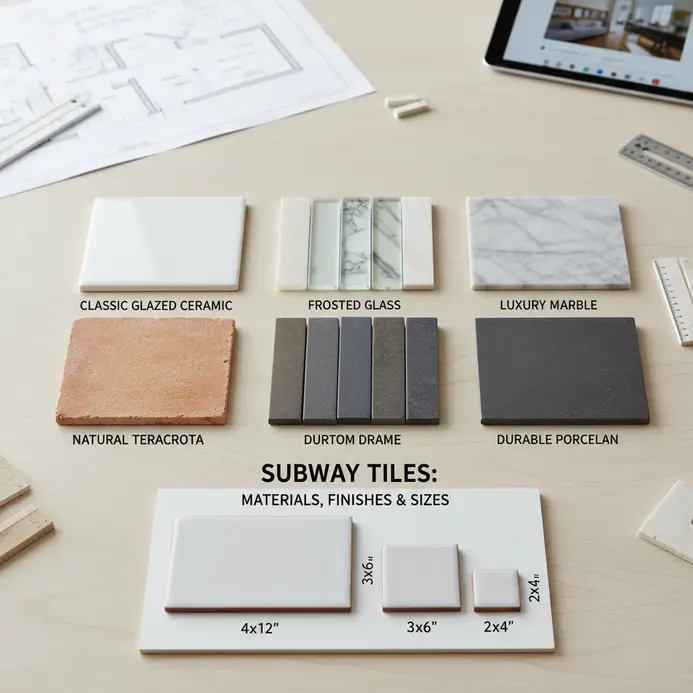
Ceramic remains one of the most widely used subway tile materials porcelain, ceramic, glass comparisons. A reputable glazed ceramic subway tiles supplier typically offers cost-effective options ideal for residential backsplashes and decorative walls.
However, ceramic has higher water absorption compared to porcelain. In shower walls or commercial kitchens, I’ve seen ceramic tiles show wear faster when subjected to constant cleaning chemicals.
In a ceramic vs porcelain subway tiles comparison, porcelain consistently outperforms in durability. It has lower water absorption (below 0.5%), making it ideal for porcelain metro tiles for commercial kitchens and wet areas.
For commercial subway tile for contractors, porcelain is the clear winner. In multiple restaurant projects I’ve overseen, porcelain maintained integrity despite daily high-pressure cleaning.
Glass subway tiles for backsplash installations add luminosity and depth. They reflect light beautifully, making smaller kitchens appear larger.
That said, installation requires skilled labor. Based on field experience, improper adhesive selection can cause shadowing or bonding issues behind transparent glass tiles.
How to choose subway tile material and finish depends on environment:
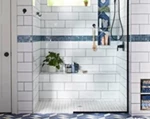
For subway tiles for bathroom shower walls, always prioritize low water absorption and slip-resistant finishes.
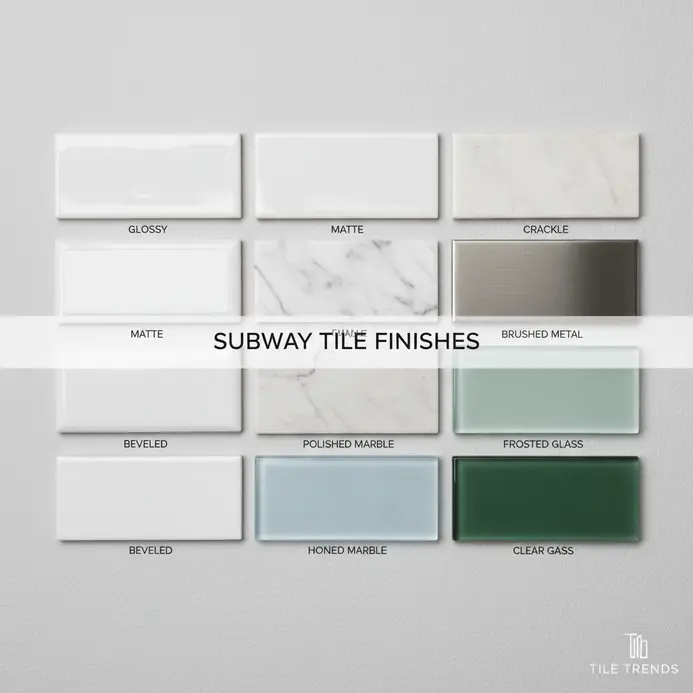
Among subway tile finishes glossy matte satin options, glossy remains the classic choice. It reflects light and enhances brightness in compact kitchens.
Grout color ideas for white subway tiles often include soft gray for subtle depth without overwhelming the space.
Matte subway tiles kitchen backsplash designs are increasingly popular in 2026 trends. They offer a soft, contemporary look.
Matte finish subway tiles care and maintenance requires slightly more attention, especially in grease-prone cooking areas. However, modern sealers reduce staining concerns significantly.
Satin finishes balance gloss and matte. The bevelled subway tile backsplash look with satin glaze adds dimension without excessive shine.
Kitchen backsplash subway tile trends 2026 show growing demand for anti-fingerprint coatings and soft neutral tones.
The most recognized of all subway tile sizes is the 3x6 format. Standard 3x6 subway tile sizes dimensions make layout planning simple and efficient.
Large subway tile 4x12 porcelain options create a more contemporary appearance. Large format 4x8 tile benefits include fewer grout lines and a streamlined look.
Rectified subway tile edges for tight grout lines provide a seamless appearance. Custom color subway tiles manufacturer capabilities allow tailored projects, particularly for hospitality exports.
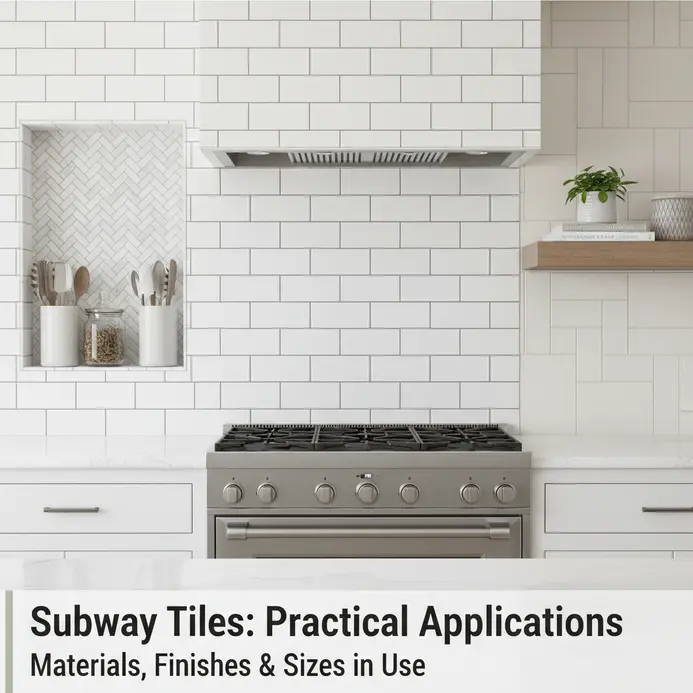
The classic brick pattern remains timeless. Subway tile design ideas brick pattern herringbone combinations are widely used for residential kitchens.
Subway tile herringbone pattern installation adds movement and visual sophistication. Vertical stacking makes ceilings appear taller.
Subway tile design ideas brick pattern herringbone layouts are especially impactful with contrasting grout.
Choosing the wrong grout shade is one of the most common visual mistakes I’ve encountered on-site.
A recent 4x12 porcelain project compared glossy and matte finishes side-by-side. After two years, both performed well, but glossy required less cleaning effort.
Using porcelain metro tiles for commercial kitchens, the client reported zero cracking despite heavy equipment impact.
Glass subway tile mosaics for shower niches provided exceptional moisture resistance when installed with epoxy grout.
Choosing the right subway tiles requires understanding materials, finishes, and sizes in detail. From ceramic affordability to porcelain durability and glass elegance, each option serves a specific purpose.
In over a decade of experience supplying global markets and supporting subway tile exporters to worldwide projects, I’ve learned that success lies in proper specification and quality sourcing. Whether you’re selecting subway tile finishes glossy matte satin or deciding between 3x6 and large 4x12 formats, informed decisions ensure long-term performance.
For wholesale inquiries, custom manufacturing, or bulk export solutions, partnering with an experienced supplier ensures consistent quality and reliable delivery.
Porcelain offers superior durability and stain resistance, while ceramic is budget-friendly. Glass provides decorative appeal. For most kitchens, porcelain is the best long-term investment.
Matte tiles may show grease slightly more, but proper sealing and routine cleaning minimize maintenance concerns.
The classic 3x6 is standard, with growing popularity for 4x12 and custom formats.
Porcelain and glass perform best due to low water absorption.
Yes. Porcelain is denser, more durable, and ideal for high-traffic commercial applications.

What Size Is Ideal for Bedroom Floor Tile Designs?
 03 June 2026

Terrazzo vs Concrete Tiles: Design, Style & Maintenance
02 June 2026

Wall Tiles & Floor Tiles Exporter to Poland
01 June 2026

Bathroom Tiles Exporter From India To United Kingdom
01 June 2026

What is the Best Material for Bathroom Floor & Wall Tiles?
06 May 2026

Asiano Ceramic has captured the memories of millions of customers by creating in home interior design.Asiano Ceramic strives to be the most demanded and quality manufacture and exporter ceramic vitrified tiles in Indian and international markets. We are highly committed to serving our patrons and clients right. We are constructing India’s largest wall tiles manufacturing plant and We will supply in both Indian market as well as overseas.
ASIANO CERAMIC LLP | Designed & Managed by : Lightlink Solutions

Whatsapp Chatx
Hi! Click one of our representatives below to chat on WhatsApp or send us email to inquiry@asianoceramic.com
 |
Mehul Vasoya 0091 95105 63767 |
|
Dhaval Detroja 0091 97127 38883 |